
CHILDREN’S HOUSE

CHILDREN’S HOUSE (3-6)

Overview of Children’s House

The Children’s House is an environment designed for young children. The combination of beauty and order attracts children to explore. Children choose activities, working purposefully and independently. The freedom to choose their own activity and to repeat as long as they like encourages self-directed activity and deep concentration. The activities meet children’s interests and developmental needs fostering spontaneous, self-directed choices.

There are four main areas in the Children’s House: Practical Life, Sensorial, Language and Mathematics. Considerable emphasis is also placed on cultural aspects such as music, art, geography, botany and zoology.

Practical Life

Language

Sensorial

Mathematics
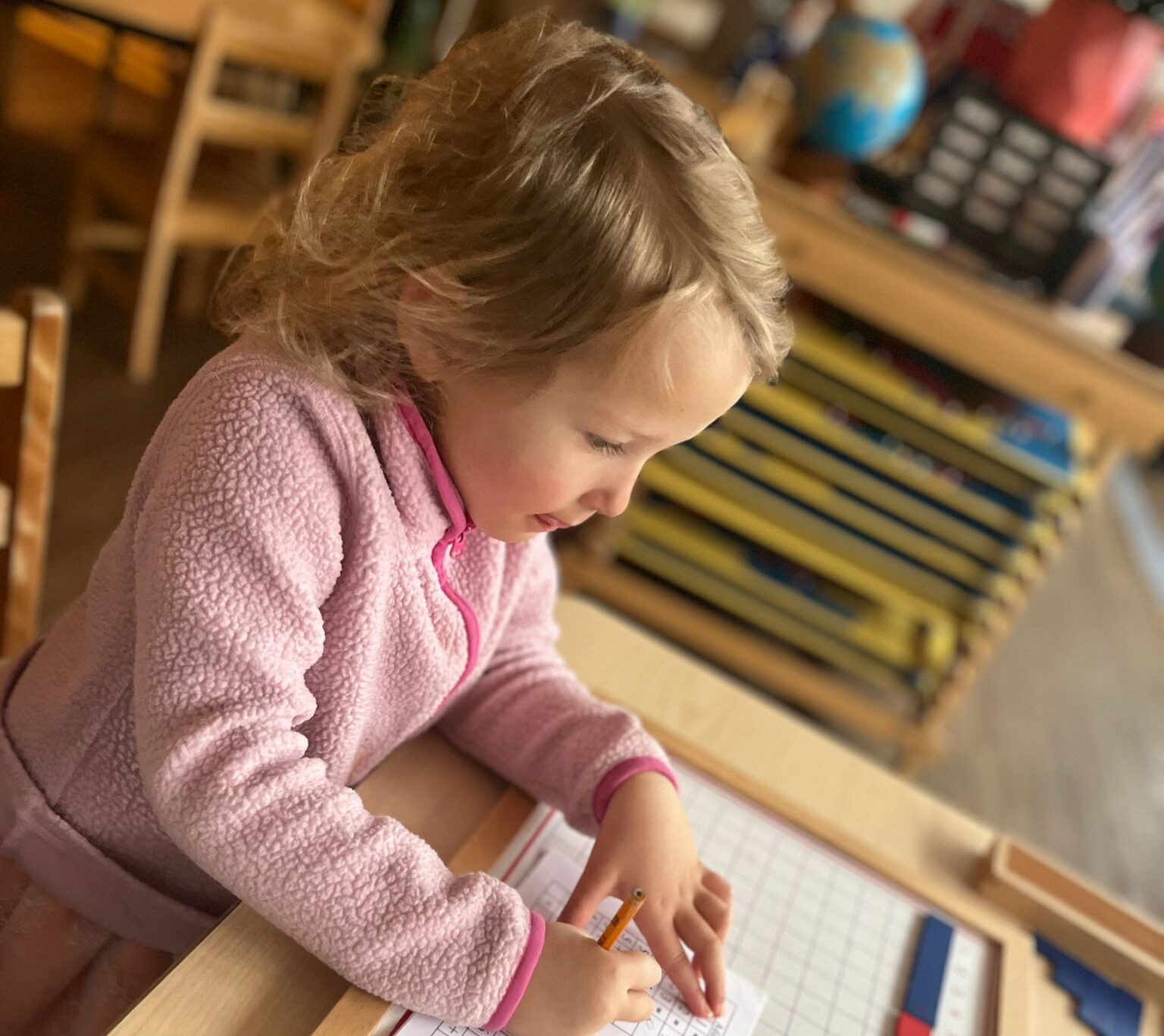
The Children’s House Curriculum:  “Nurturing the Absorbent Mind” 

The Children’s House nurtures the “absorbent mind” and the development of self-discipline, offering a curriculum of beautifully maintained materials that act as the child’s true teachers. Learning begins with concrete exploration, where “learning how to think” is facilitated by a built-in control of error in the materials, allowing children to self-correct and develop analytical reasoning without needing an adult’s approval. Through a three-hour uninterrupted work cycle, students move from simple tasks to deep periods of concentration, mastering concepts of language, mathematics, and culture at their own pace. The mixed-age community fosters a unique social intelligence; younger children learn by observing their peers, while older children solidify their own understanding by mentoring others. By age six, students are intellectually curious, socially responsible, and possess a refined ability to focus, making them ready for the imaginative and research-based work of the Elementary years.
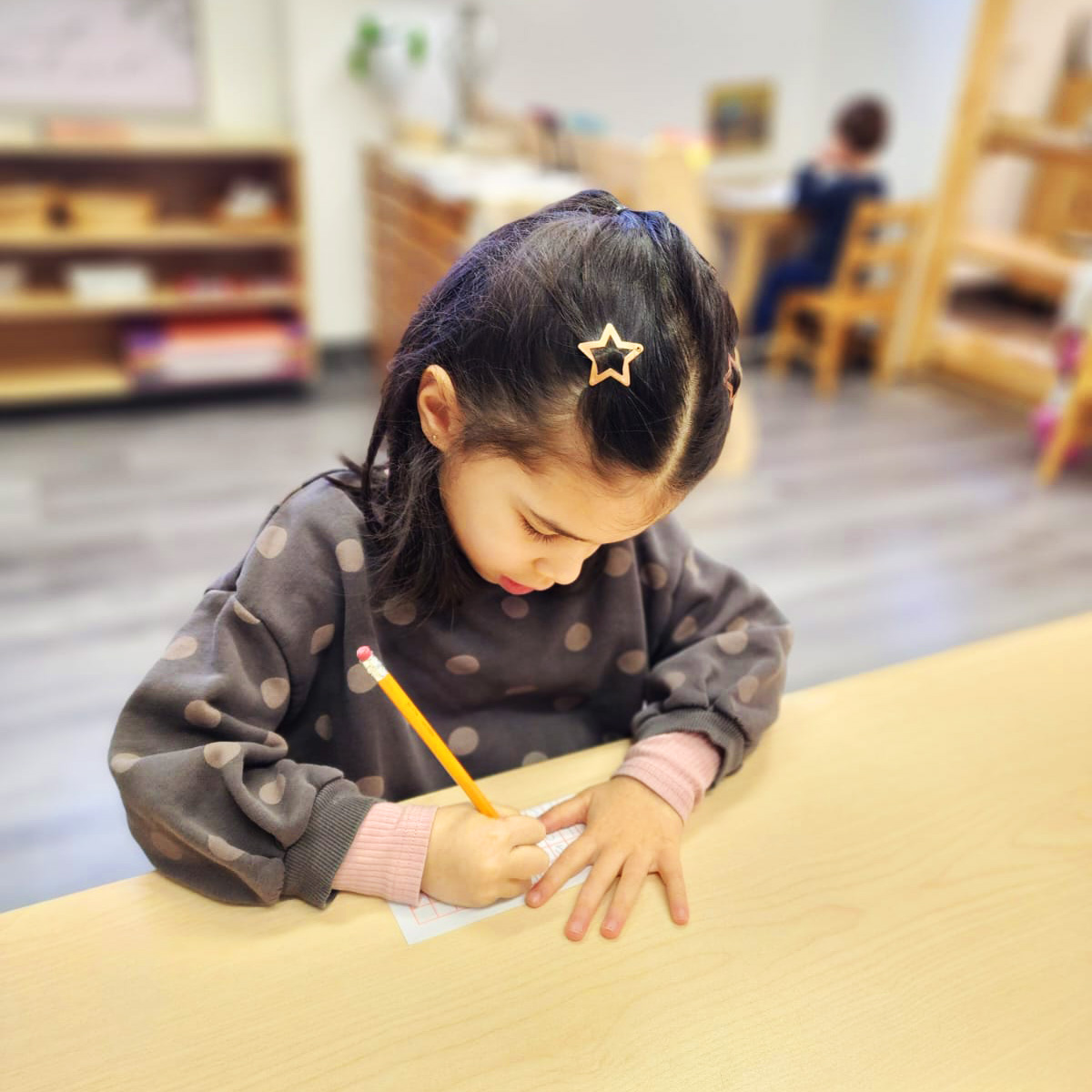
CHILDREN’S HOUSE

Guiding Principles for a Montessori 3-6 Environment

There are four main areas in the Children’s House: Practical Life, Sensorial, Language and Mathematics.

Adolescent Plane of Development

Physical Space

  • Overall, the environment is ordered, clean and aesthetically pleasing
  • Complete set of Montessori materials as per the Training albums
  • Material for each activity is complete, clean, in very good condition and adorned with small details
  • Materials arranged in orderly, sequential manner
  • Materials accessible to children
  • Furniture and equipment is child-sized to facilitate independence
  • Floor space to allow for work mats on the floor
  • Access to outdoor area for daily outdoor play, weather-permitting
  • Access to a garden to introduce children to nature and to care for the outdoor environment
  • Access to a gymnasium with specific activities that assist in the development and refinement of movement and equilibrium
  • Access to an hygenic, semi-private toileting area
  • Access to water supply in classroom
  • Good lighting – source of natural light preferable
  • Plants, flowers and small animals/class pets to introduce children to nature and for the care of and respect for all living things

Intangible Atmosphere

  • There is a hum of activity
  • Minimum 2 hour uninterrupted morning work cycle
  • Two hour sleep period in the afternoon for full-day children
  • Concentration is protected
  • Children may work at their own pace
  • Individual differences are respected and supported
  • The children are joyful, spontaneous, enthusiastic, independent and peaceful
  • No rewards, punishments or coercion; the children obey joyfully, and trust in what their Teacher tells them
  • All adults in the environment model respectful social interaction/grace and courtesy
  • There is mutual respect and courtesy between adults and children
  • The vision for each individual child and for the children as a whole is consistent amongst all adults who assist them in their development
  • It is about the children and about nothing else
The Prepared Environment

Physical Space

  • Overall the environment is ordered, clean and aesthetic
  • Complete set of Montessori materials as per the Training albums
  • Material for each activity is complete, clean and in very good condition
  • Materials arranged in orderly, sequential manner
  • Materials accessible to children
  • Narrow line on the floor for walking on the line
  • Furniture and equipment is child-sized to facilitate independence
  • Floor space to allow for work mats on the floor
  • Access to outdoor area for daily outdoor play
  • Access to outdoor area for extensions into nature, gardening, etc.
  • Access to washroom facilities
  • Access to water supply in classroom
  • Good lighting – source of natural light preferable

Intangible Atmosphere

  • There is a hum of activity
  • No rewards, punishments or coercion
  • Generally, there are no rules regarding the use of certain materials at certain times
  • Children may work at their own pace
  • There is mutual respect and courtesy between adults and children
  • Individual differences are respected and supported
  • Periods of reflection are respected
  • Minimum 3 hour uninterrupted morning work cycle plus further minimum 2 hour afternoon work cycle
  • Concentration is protected
The Children
  • Ages 2½/3 to 6 years together
  • Children complete full cycle in the same environment
  • Free to choose their own activities
  • May be directed by the Teacher at times, but there is no assigned work
  • Are engaged in a variety of activities from different areas of the program
  • Demonstrate concentration and care in the use of the materials
  • Use materials purposefully
  • Persist with an activity as they deem necessary
  • Repeat activities for as long as they deem necessary
  • Put materials away after use
  • Store finished and unfinished work
  • Occasionally select and compile samples of completed work
  • Free to help each other or show each other how to do things
  • Interact freely with each other and with the Teacher
  • Are happy and are purposefully engaged in their activities
  • The children’s movement is purposeful and orderly
  • Are responsible for themselves and for the environment
  • Demonstrate independence in their self-care and activities
  • Remain in one prepared environment throughout the day
  • Older children have opportunity for Extended Day/Full day in third year as minimum
The Adults

Teacher

  • Demonstrates: joy, patience, curiosity, humility, sense of humour
  • Allows for exploration and nurtures a sense of wonder
  • Prepares and maintains the prepared environment
  • Provides consistent limits to the children
  • Uses positive redirection
  • Models grace and courtesy with adults and children
  • Gives presentations (lessons) to individuals or small groups
  • Re-presents as needed
  • Rarely works with the whole group
  • Observes the children at all times
  • Takes time to observe individual children and the group as a whole
  • Demonstrates careful and precise movements
  • Uses a calm, soft voice
  • Uses clear, precise, complete language
  • Is emotionally available to the children
  • Promotes independence, yet assists children as needed
  • Assists children as needed in social situations/conflict resolution
  • Plans presentations for each child on a weekly/monthly/yearly basis
  • Keep records of presentations shown and of observations
  • Presents from all areas of the program as per the Training albums
  • Engages in regular professional development activities
  • Communicates regularly with parents outside class time
  • Assists parents to understand Montessori philosophy and pedagogy
  • One teacher per class

Assistant

  • Assists in the preparation and maintenance of the prepared environment
  • Non-teaching role
  • Reinforces consistent limits with the children
  • Uses positive redirection
  • Models grace and courtesy with adult and children
  • Uses clear, precise, complete language
  • Uses a calm, soft voice
  • Observes children at all times and is available to do so
  • Provides feedback to Teacher re: observations of the children
  • Protects presentations given by Teacher from interruption
  • Protects concentration of children by limiting interruptions
  • Promotes independence, yet assists children as needed
  • Assists children as needed in social situations/conflict resolution
  • Assists Teacher as needed
  • If assistant speaks a second language in the environment, she strives to speak it consistently

CHILDREN’S HOUSE

Guiding Principles for a Montessori 3-6 Environment

There are four main areas in the Children’s House: Practical Life, Sensorial, Language and Mathematics.

Adolescent Plane of Development

Physical Space

  • Overall, the environment is ordered, clean and aesthetically pleasing
  • Complete set of Montessori materials as per the Training albums
  • Material for each activity is complete, clean, in very good condition and adorned with small details
  • Materials arranged in orderly, sequential manner
  • Materials accessible to children
  • Furniture and equipment is child-sized to facilitate independence
  • Floor space to allow for work mats on the floor
  • Access to outdoor area for daily outdoor play, weather-permitting
  • Access to a garden to introduce children to nature and to care for the outdoor environment
  • Access to a gymnasium with specific activities that assist in the development and refinement of movement and equilibrium
  • Access to an hygenic, semi-private toileting area
  • Access to water supply in classroom
  • Good lighting – source of natural light preferable
  • Plants, flowers and small animals/class pets to introduce children to nature and for the care of and respect for all living things

Intangible Atmosphere

  • There is a hum of activity
  • Minimum 2 hour uninterrupted morning work cycle
  • Two hour sleep period in the afternoon for full-day children
  • Concentration is protected
  • Children may work at their own pace
  • Individual differences are respected and supported
  • The children are joyful, spontaneous, enthusiastic, independent and peaceful
  • No rewards, punishments or coercion; the children obey joyfully, and trust in what their Teacher tells them
  • All adults in the environment model respectful social interaction/grace and courtesy
  • There is mutual respect and courtesy between adults and children
  • The vision for each individual child and for the children as a whole is consistent amongst all adults who assist them in their development
  • It is about the children and about nothing else
The Prepared Environment

Physical Space

  • Overall the environment is ordered, clean and aesthetic
  • Complete set of Montessori materials as per the Training albums
  • Material for each activity is complete, clean and in very good condition
  • Materials arranged in orderly, sequential manner
  • Materials accessible to children
  • Narrow line on the floor for walking on the line
  • Furniture and equipment is child-sized to facilitate independence
  • Floor space to allow for work mats on the floor
  • Access to outdoor area for daily outdoor play
  • Access to outdoor area for extensions into nature, gardening, etc.
  • Access to washroom facilities
  • Access to water supply in classroom
  • Good lighting – source of natural light preferable

Intangible Atmosphere

  • There is a hum of activity
  • No rewards, punishments or coercion
  • Generally, there are no rules regarding the use of certain materials at certain times
  • Children may work at their own pace
  • There is mutual respect and courtesy between adults and children
  • Individual differences are respected and supported
  • Periods of reflection are respected
  • Minimum 3 hour uninterrupted morning work cycle plus further minimum 2 hour afternoon work cycle
  • Concentration is protected
The Children
  • Ages 2½/3 to 6 years together
  • Children complete full cycle in the same environment
  • Free to choose their own activities
  • May be directed by the Teacher at times, but there is no assigned work
  • Are engaged in a variety of activities from different areas of the program
  • Demonstrate concentration and care in the use of the materials
  • Use materials purposefully
  • Persist with an activity as they deem necessary
  • Repeat activities for as long as they deem necessary
  • Put materials away after use
  • Store finished and unfinished work
  • Occasionally select and compile samples of completed work
  • Free to help each other or show each other how to do things
  • Interact freely with each other and with the Teacher
  • Are happy and are purposefully engaged in their activities
  • The children’s movement is purposeful and orderly
  • Are responsible for themselves and for the environment
  • Demonstrate independence in their self-care and activities
  • Remain in one prepared environment throughout the day
  • Older children have opportunity for Extended Day/Full day in third year as minimum
The Adults

Teacher

  • Demonstrates: joy, patience, curiosity, humility, sense of humour
  • Allows for exploration and nurtures a sense of wonder
  • Prepares and maintains the prepared environment
  • Provides consistent limits to the children
  • Uses positive redirection
  • Models grace and courtesy with adults and children
  • Gives presentations (lessons) to individuals or small groups
  • Re-presents as needed
  • Rarely works with the whole group
  • Observes the children at all times
  • Takes time to observe individual children and the group as a whole
  • Demonstrates careful and precise movements
  • Uses a calm, soft voice
  • Uses clear, precise, complete language
  • Is emotionally available to the children
  • Promotes independence, yet assists children as needed
  • Assists children as needed in social situations/conflict resolution
  • Plans presentations for each child on a weekly/monthly/yearly basis
  • Keep records of presentations shown and of observations
  • Presents from all areas of the program as per the Training albums
  • Engages in regular professional development activities
  • Communicates regularly with parents outside class time
  • Assists parents to understand Montessori philosophy and pedagogy
  • One teacher per class

Assistant

  • Assists in the preparation and maintenance of the prepared environment
  • Non-teaching role
  • Reinforces consistent limits with the children
  • Uses positive redirection
  • Models grace and courtesy with adult and children
  • Uses clear, precise, complete language
  • Uses a calm, soft voice
  • Observes children at all times and is available to do so
  • Provides feedback to Teacher re: observations of the children
  • Protects presentations given by Teacher from interruption
  • Protects concentration of children by limiting interruptions
  • Promotes independence, yet assists children as needed
  • Assists children as needed in social situations/conflict resolution
  • Assists Teacher as needed
  • If assistant speaks a second language in the environment, she strives to speak it consistently